
Patient Education Portal for DPC Practice Growth | Amplify
Patient Education Portal: Why Direct Care Practices Are Adding One
Most Direct Primary Care (DPC) patients have questions between visits, and most of those questions never make it back to the practice. A patient education portal gives your practice a place to answer them anyway. For growing Direct Primary Care (DPC) and Direct Specialty Care (DSC) practices, it is becoming a meaningful part of what a membership offers between visits, not an extra.
What a Patient Education Portal Means for DPC Practices
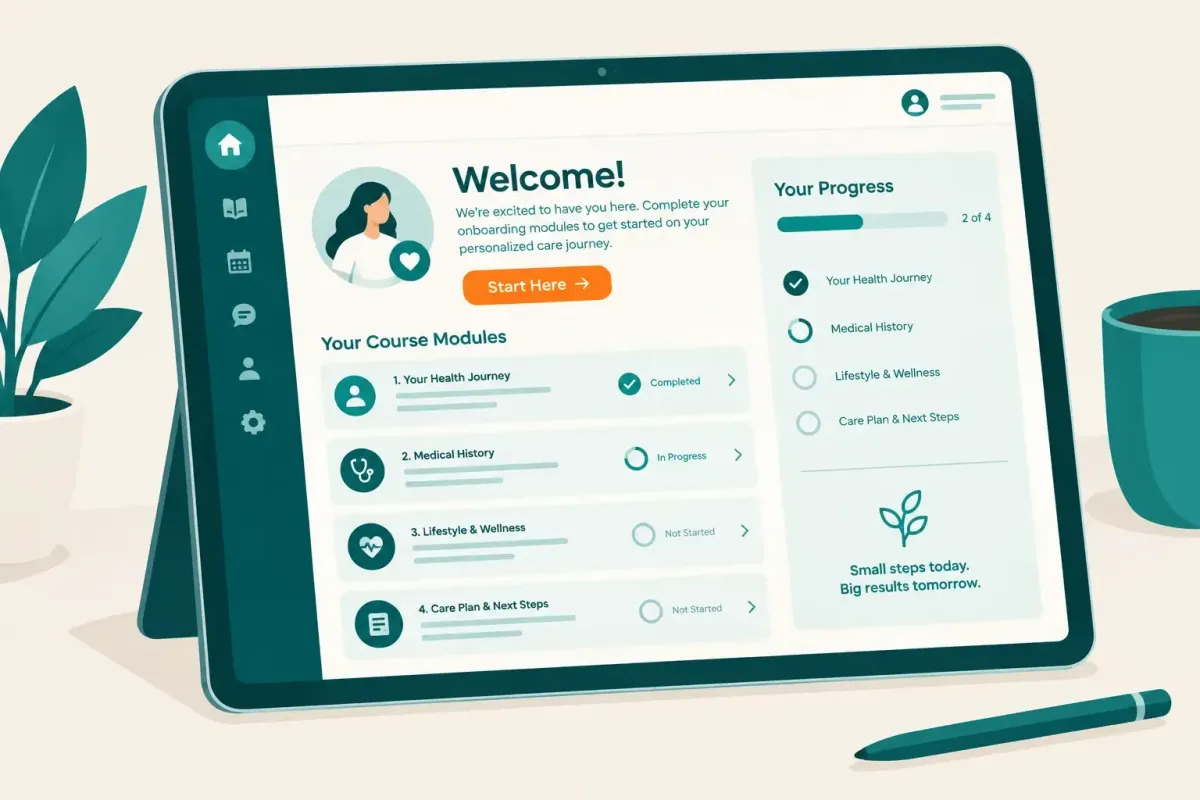
A patient education portal is a secure, members-only space where a practice hosts health content, onboarding modules, and educational resources that patients can access between visits, on their own schedule.
For a membership-based practice, this type of resource matters more than it does for a fee-for-service clinic. Your patients are paying monthly for access and value, not for a single transaction. A portal gives them a tangible reason to feel that value between appointments.
This is different from a general patient portal tied to scheduling or billing. The focus here is content: courses, onboarding modules, and ongoing education that patients can revisit whenever a question comes up. This kind of healthcare content marketing speaks directly to your own patients instead of a generic audience.
Why Patients Expect Self-Serve Health Information Now
Patients look up their symptoms, medications, and conditions online long before they ever call your office. The Office of the National Coordinator for Health Information Technology notes that adding educational resources to patient portals can make them more useful and effective and help increase patient engagement. When that content lives inside your own practice's portal rather than in a random search result, you control the message and its accuracy.
There's a literacy gap driving this, too. National data indicate that more than one-third of U.S. adults have limited health literacy, which contributes to poor health outcomes and affects patient safety, health care access, and quality, according to research published in American Family Physician.
For Direct Care practices specifically, this ties directly to the membership model. Patients who understand what their membership includes, how to use it, and what to expect at each stage are patients who stick around.
How to Build a Patient Education Portal Into Your Growth Toolkit
You do not need a custom build to get this right. Most practices start with three types of content and expand from there as they learn what their members are actually asking.
Onboarding modules
Walk new members through what their membership covers, how to book appointments, and what to expect in their first 90 days. This reduces the volume of basic questions your team fields during a patient's first few weeks and sets the tone for the entire membership relationship.
Condition and service education
Short explainers on common conditions, preventive care, or services your practice offers help patients feel prepared before a visit, not just informed after one. When members understand what is available to them, they use it more and disengage less.
Ongoing training content
For practices running wellness programs or membership tiers, structured courses give patients a reason to return to the portal outside of appointment reminders. This is where patient experience marketing moves from a concept into something a member actually notices and values.
Keep the content itself straightforward. Short sections, plain language, and a clear structure will do more for patient comprehension than a long, clinical document ever will. A practical starting point is to spend one week listing the ten questions your team hears most often from new members. Those ten questions are the first ten pieces of content your portal needs. Once those are answered inside a structured space, your team stops fielding the same calls and your members stop turning to unvetted search results for information that should be coming from you.
How Amplify DPC Supports Patient Education Portals
Amplify DPC is a marketing and automation platform built for DPC and DSC practices, and it includes the tools to deliver this kind of portal without a separate system. Through the Courses & Membership feature, available on the Scale plan, your team can package onboarding modules, condition education, and patient-support training inside a secure, members-only space, connected to the same platform you already use for scheduling, communication, and patient engagement across the full lifecycle.
Because everything lives on one platform, a new patient's onboarding sequence can hand off directly into their education content, without a separate login for your team to manage. Data within that portal remains part of a secure patient communication strategy configured for HIPAA compliance under a signed BAA, so educational content lives in the same secure environment as the rest of your practice.
Amplify DPC also includes 24/7 live support and tailored onboarding, so building out your first education modules doesn't have to fall entirely on your team's shoulders. If you want a fully built solution, a done-for-you workflow and automation setup is available as well, though copywriting and content aren't included in the DFY service by default.
This kind of proactive education pairs naturally with other retention tools, such as patient satisfaction surveys, because an informed patient is more likely to provide useful, specific feedback rather than a vague complaint.
Ready to See This in Action?
See how a patient education portal fits into your practice workflow. Book a demo, and walk through what this looks like for your members inside Amplify DPC.
Frequently Asked Questions
1. What is a patient education portal?
A patient education portal is a secure, members-only space where a practice hosts health information, onboarding content, and educational resources that patients can access at their convenience. It's built around ongoing content rather than a single visit or transaction.
2. Why are DPC practices adding a patient education portal?
DPC and DSC practices run on membership relationships, so patients need to feel ongoing value between appointments, not just access during visits. A portal gives members a reason to engage with the practice on their own schedule and reduces the volume of repetitive questions your team handles manually.
3. How does a patient education portal support membership growth?
Patients who understand their membership and feel supported between visits are more likely to renew and refer to others. When common questions are answered inside a structured portal, your team spends less time on repetitive intake calls and more time on clinical conversations.
4. Does a patient education portal replace patient communication with the care team?
No. A portal supports communication; it doesn't replace it. It handles the routine, recurring questions so that when a patient does reach out directly, your team can give that conversation its full attention.
5. Is this type of patient portal secure?
Yes, when it's part of a platform designed for healthcare use. Amplify DPC's Courses & Membership feature is configured for HIPAA compliance with a signed BAA, so patient education content lives inside the same secure environment as the rest of your practice's data.
Key Takeaways
Build onboarding, condition education, and ongoing training content as three separate content types inside your portal, not one generic library.
Write portal content in plain, non-clinical language to close the health literacy gap your patients are already navigating on their own.
Connect your portal to your onboarding sequence so new members land in relevant content automatically instead of searching for it.
Treat the portal as a retention tool tied to your membership model, not a one-time onboarding checklist.
Start with a small set of core modules and expand based on the questions your team hears most often.